Confronting the Past
The knock on the door startled me. I tried to ignore it, but my heart raced at the thought of my brother, Tate, standing outside. I wasn’t ready for another confrontation, yet I couldn’t deny the curiosity tugging at me. I opened the door cautiously.
Tate stood there, holding an old guitar, my father’s old guitar. “Hey,” he said, his expression softer than I remembered. “I thought you might want this.”
My hands trembled as I took the instrument. The wood was warm and familiar, the strings worn from years of use. “I don’t…how did you find it?”
Tate stepped inside, glancing around my empty apartment. “Mom was cleaning out the attic. I asked her to let me keep it for a while.” He shifted his weight, fidgeting. “I figured you could use it.”
“Why?” I asked, my voice barely above a whisper. “You didn’t care about any of this before.”
“I’m trying, okay? I’ve been struggling too—more than you think.”
I studied his face, searching for truth amid the uncertainty. “What do you mean?”
“It’s just…there’s stuff we don’t talk about.” He took a breath, looking down at the guitar. “I feel like we’re all just pretending everything’s fine. But it’s not, is it?”
I wanted to push him away, to guard my heart, but something in his gaze softened me. “What do you want to say?”
“Dad’s death hit us all hard. I can’t shake the guilt. I should have been there for him more.”
The air thickened between us, heavy with emotions we had both avoided. “You were just a kid, Tate,” I said, but I wasn’t sure if I believed my own words.
His voice dropped to a whisper. “But I still feel like I could have done more.”
As he spoke, the guitar became a bridge between us, a reminder of the walls our family had built. We were just two siblings trying to navigate through the rubble of our shared past.
The Bitter Truth
The conversation with Tate lingered in my mind as I paced my living room, the guitar cradled in my arms. I needed answers, and my mother had them. With trembling hands, I dialed her number. “We need to talk.”
When she finally arrived, I felt the tension seep into every corner of my apartment. “What’s this about?” she asked, crossing her arms defensively.
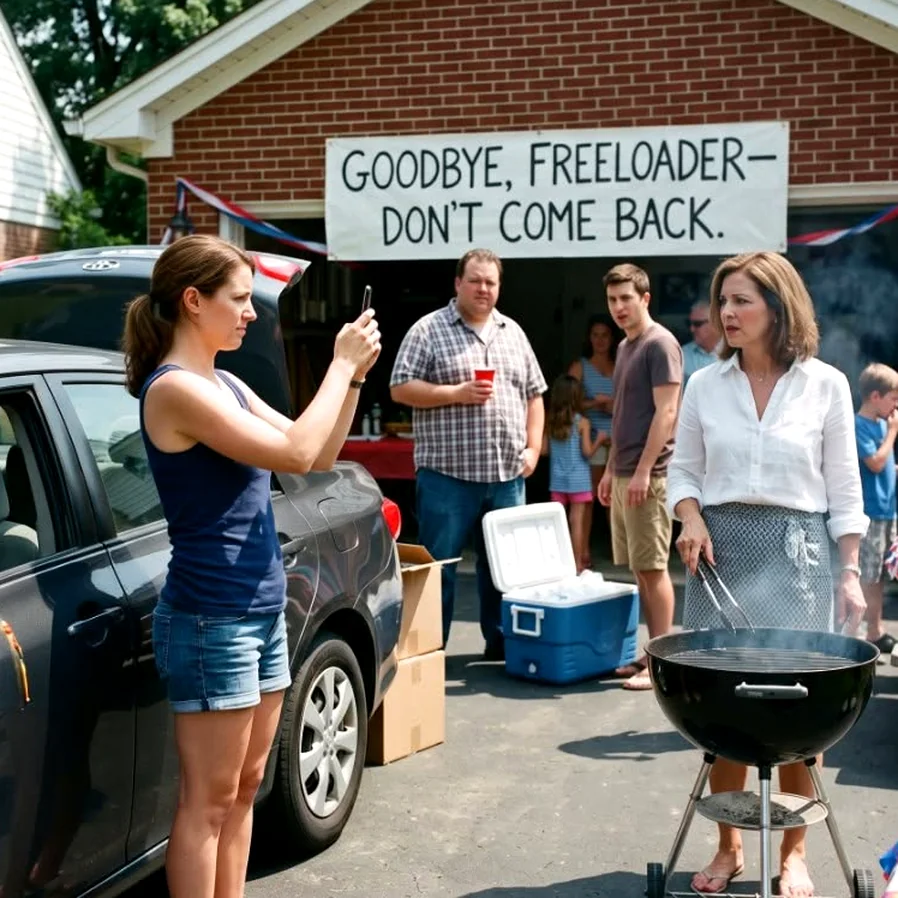
“Why did you plan that barbecue?” I demanded. “Was it really just tough love?”
“You needed a wake-up call.” Her steel gaze met mine, but I could see the flicker of doubt behind it.
“You were cruel, Mom. Everyone saw it.”
“You don’t understand,” she shot back, anger bubbling beneath her calm exterior. “I was only trying to teach you how to fend for yourself.”
I felt a rush of frustration. “By humiliating me? By pushing me away?” Her silence spoke volumes.
As she turned to leave, I heard her muttering on the phone outside. “Yes, I’ll handle it. She’ll be fine—she needs to learn.”
My heart sank. I pressed my ear against the door. “I just can’t have her fail again. It’s for her own good.”
My mother had sabotaged my chances, believing that struggle would somehow make me stronger. It was clear now. She had been holding back connections, opportunities, all because she thought I needed to learn the hard way.
My vision blurred with anger and betrayal. “You never wanted me to succeed, did you?” I shouted through the door, but she had already walked away.
As I stood there, the weight of her cruelty crashed over me like a tidal wave. I had always thought I was the failure. But in that moment, I recognized the truth: she had the power to nurture my dreams but chose instead to crush them.
The guitar felt heavy in my hands, a symbol of my past and a reminder of the bitter legacy I was meant to escape. I was on my own now, but I would carve my own path—one without her shadow looming over me.